Detailed Climate Information for Morocco: Regional Weather Patterns and Data
Morocco, located in North Africa, offers a diverse climate that varies across its regions.
Morocco experiences a Mediterranean climate on its coast, characterized by hot, dry summers and mild, wet winters. Inland areas such as the Atlas Mountains have a more continental climate with colder temperatures and snowfall in winter. The Sahara Desert in the south brings extreme heat and arid conditions.
Best Travel Time Guide for Morocco: Ideal Seasons and Weather Insights
The best time to travel to Morocco depends on the region you plan to visit. Coastal areas are pleasant in spring and autumn with milder temperatures. For desert adventures, winter is ideal to avoid scorching heat. The Atlas Mountains are great for hiking in summer when the highlands offer cooler temperatures.
Detailed Climate in the Regions of Morocco
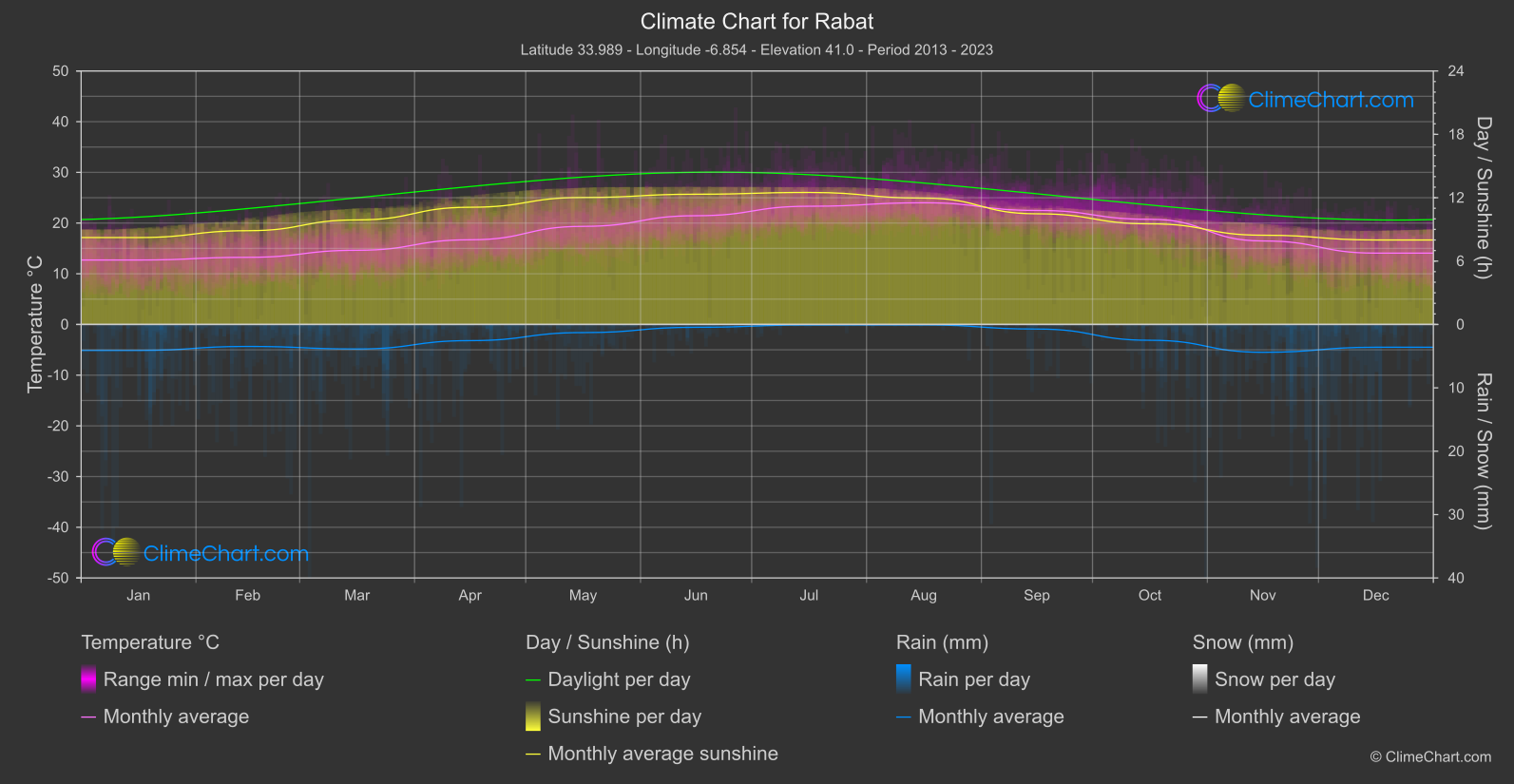
Rabat
Region North
Rabat, the capital city of Morocco, enjoys a Mediterranean climate with hot, dry summers and mild, wet winters.
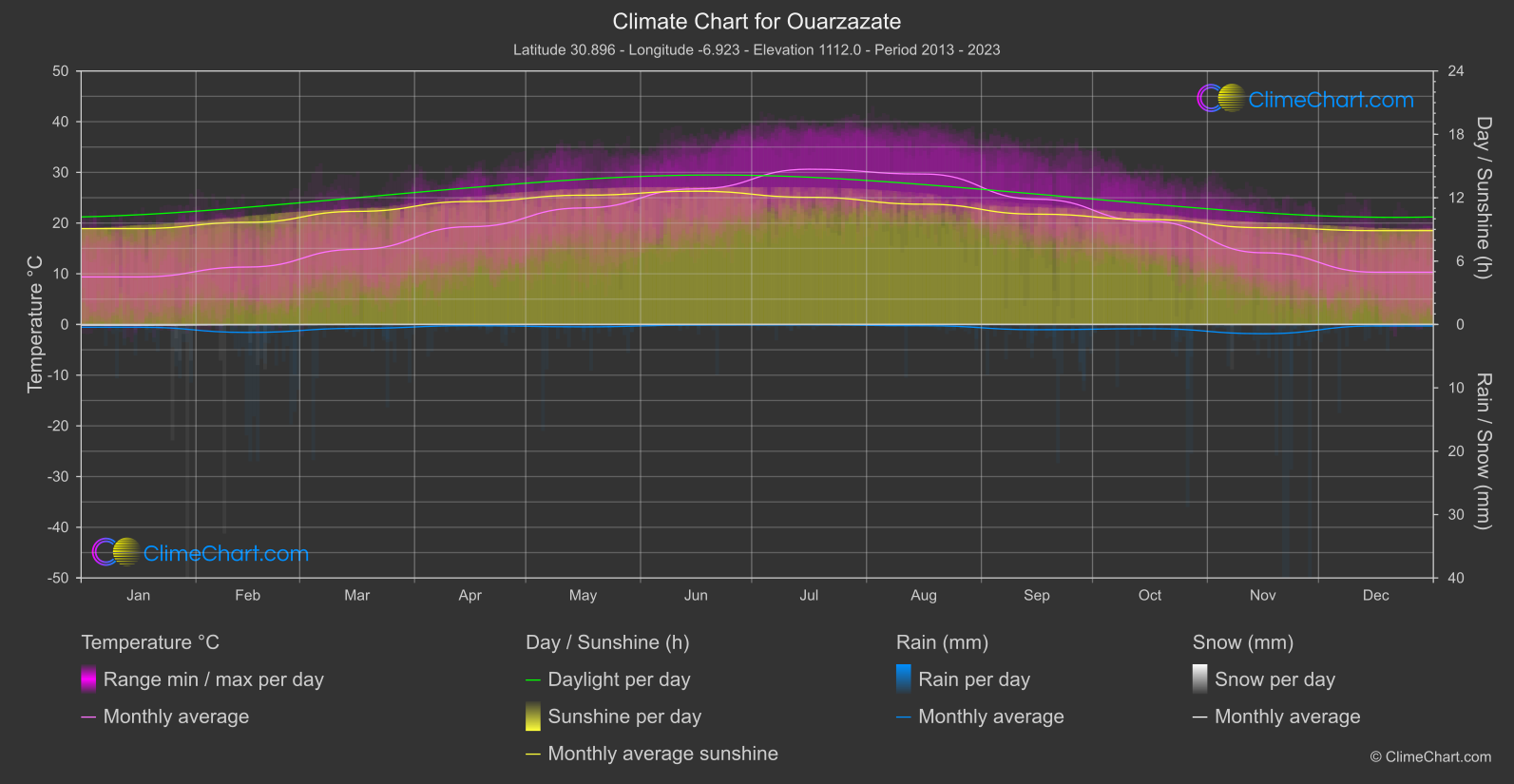
Ouarzazate
Region Central
Ouarzazate experiences a desert climate with extremely hot summers and mild winters.
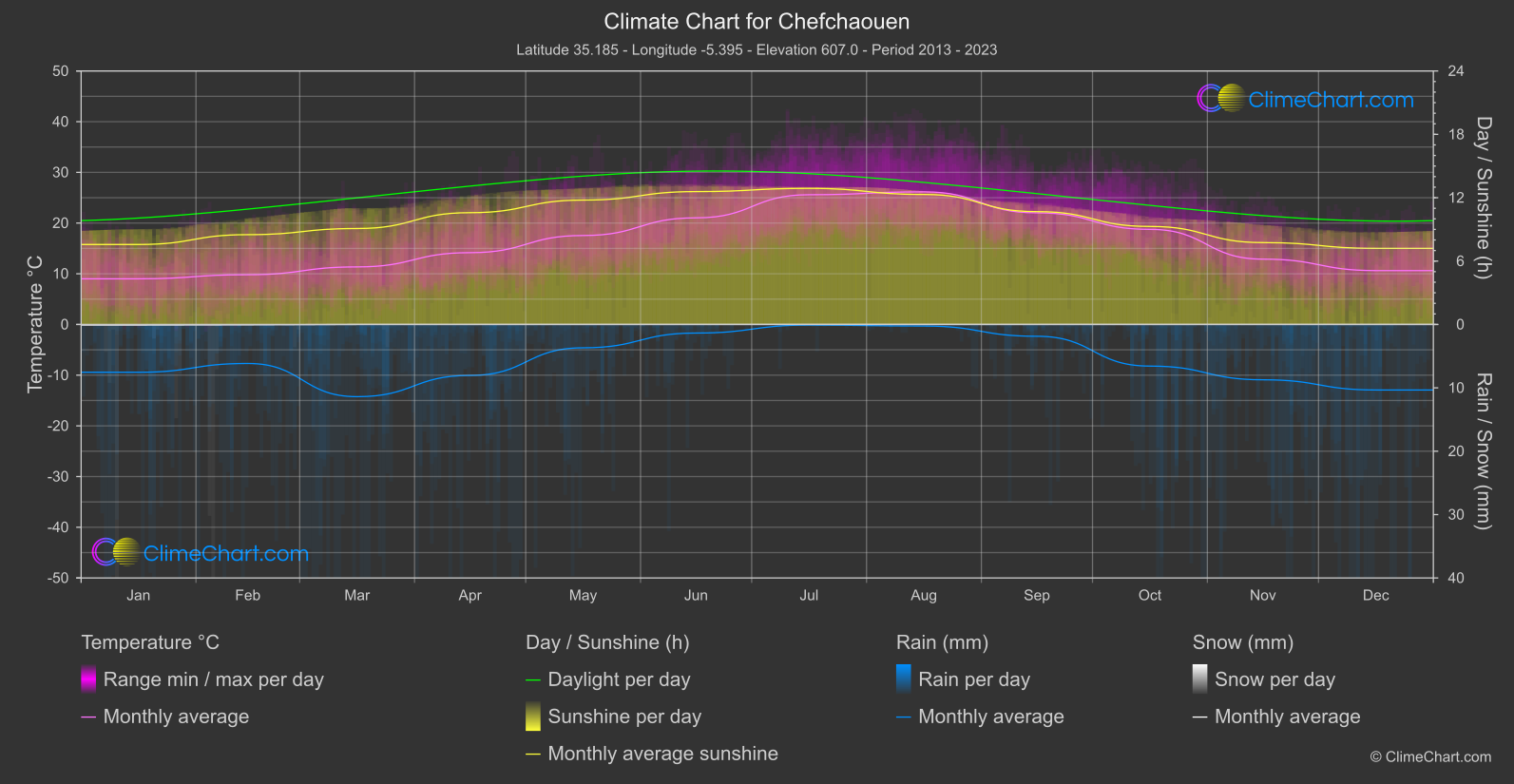
Chefchaouen
Region North
Chefchaouen, a picturesque town in the Rif Mountains of Morocco, enjoys a Mediterranean climate with hot summers and mild winters.
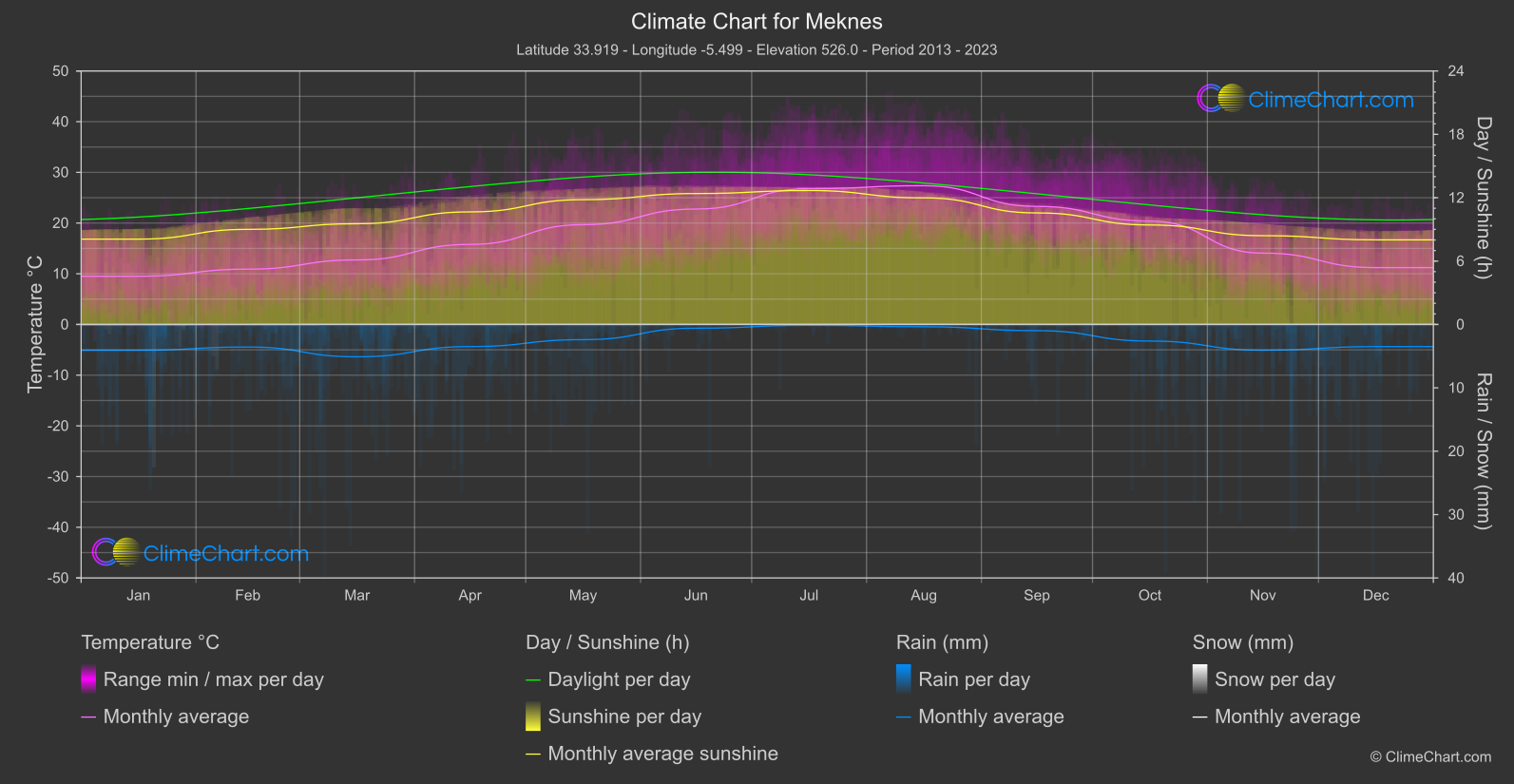
Meknes
Region North
Monthly mean temperatures are coolest in January at 9.
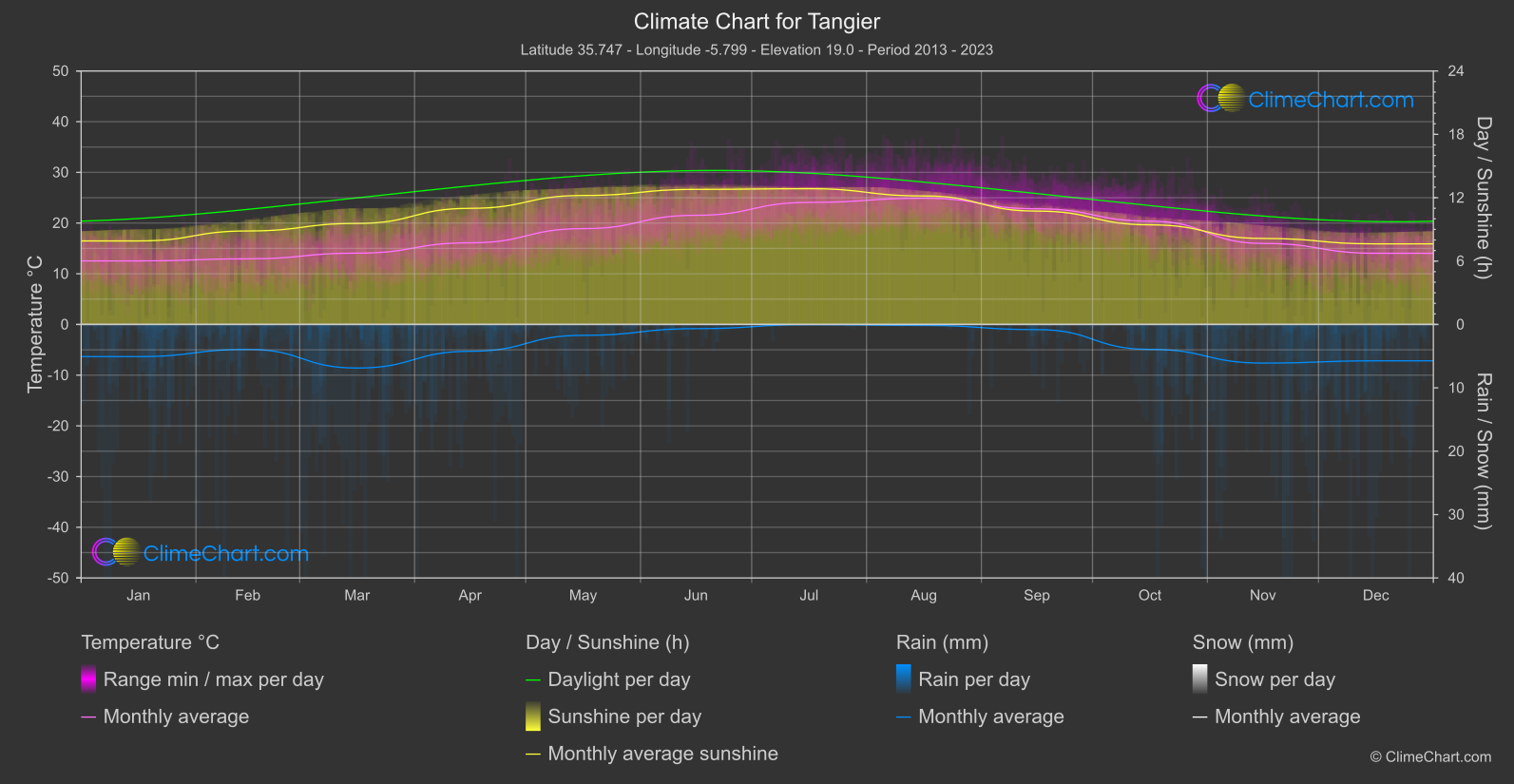
Tangier
Region North
Monthly mean temperatures are coolest in January, at 12.
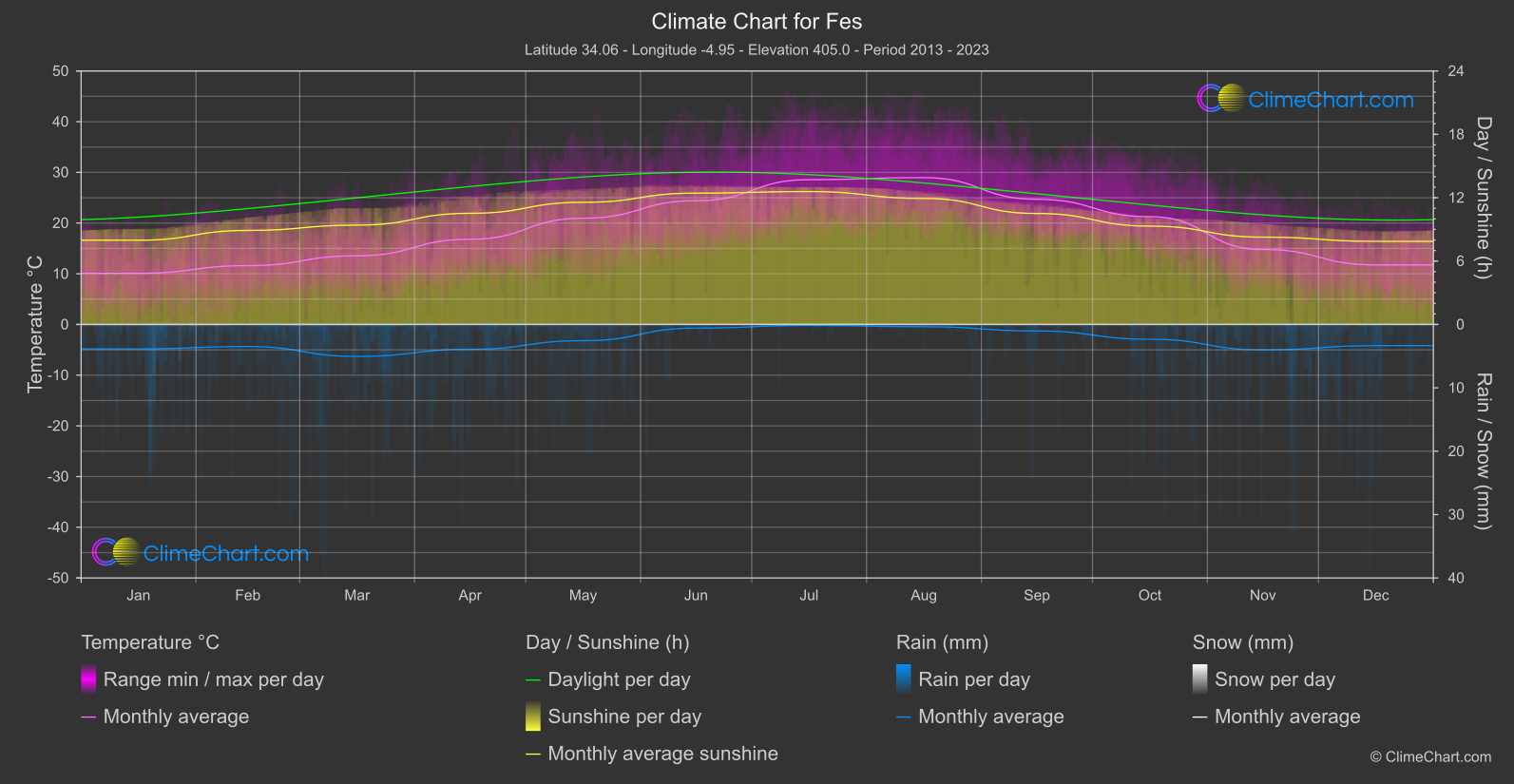
Fes
Region North-East
Monthly mean temperatures are highest in August at 29.
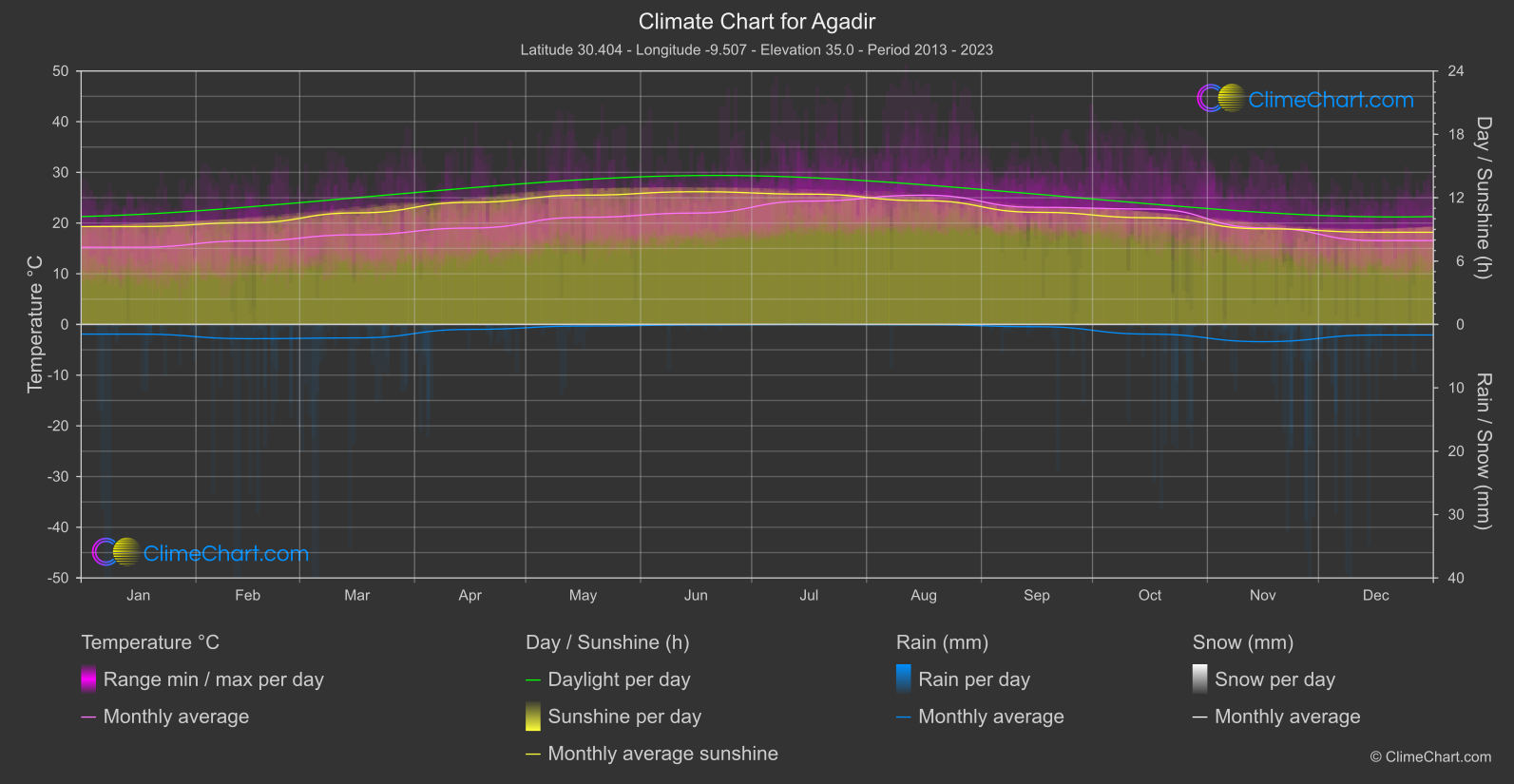
Agadir
Region West
Monthly mean temperatures are highest in August at 25.
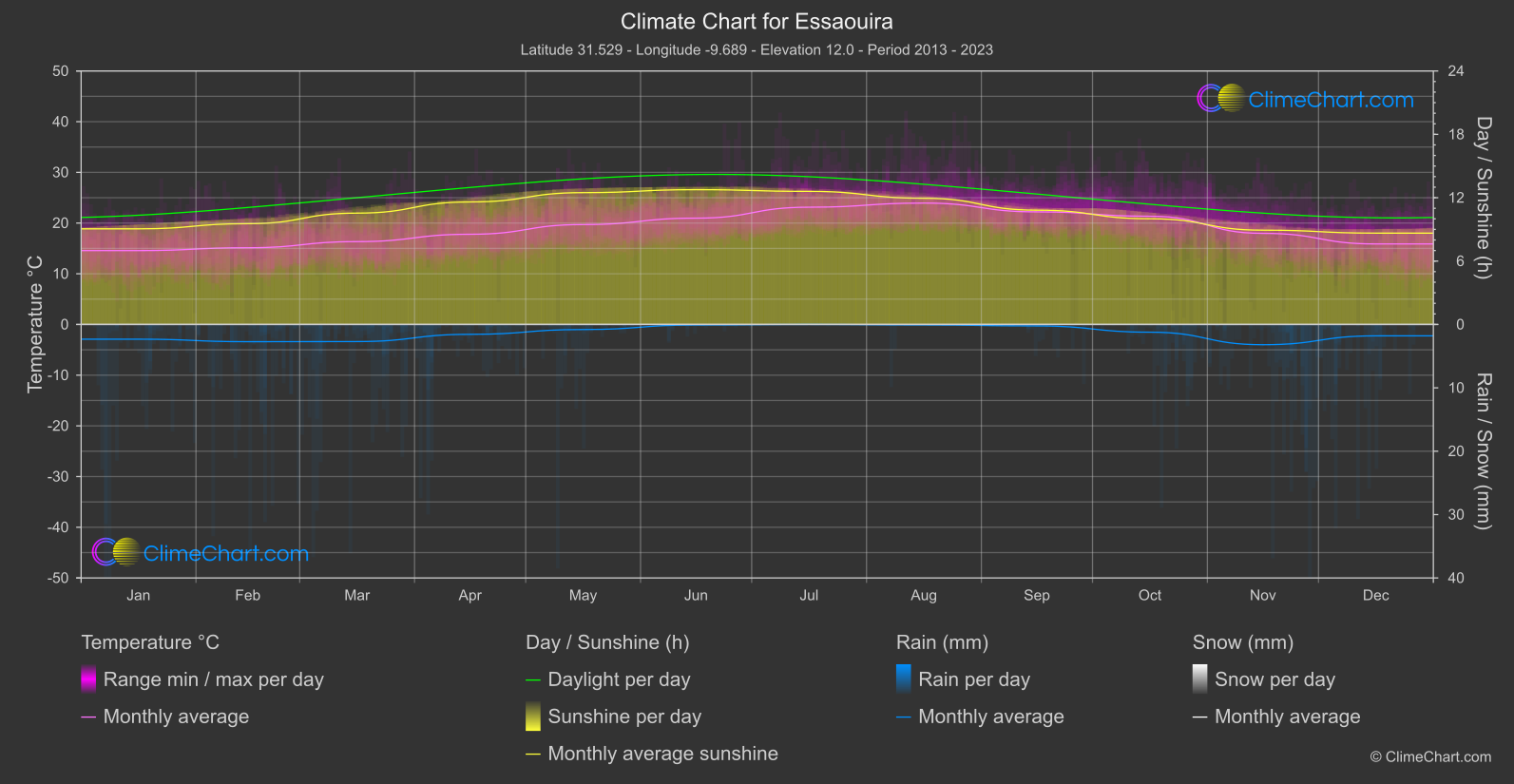
Essaouira
Region West
Essaouira enjoys a mild climate with cool sea breezes, making it a popular destination year-round.
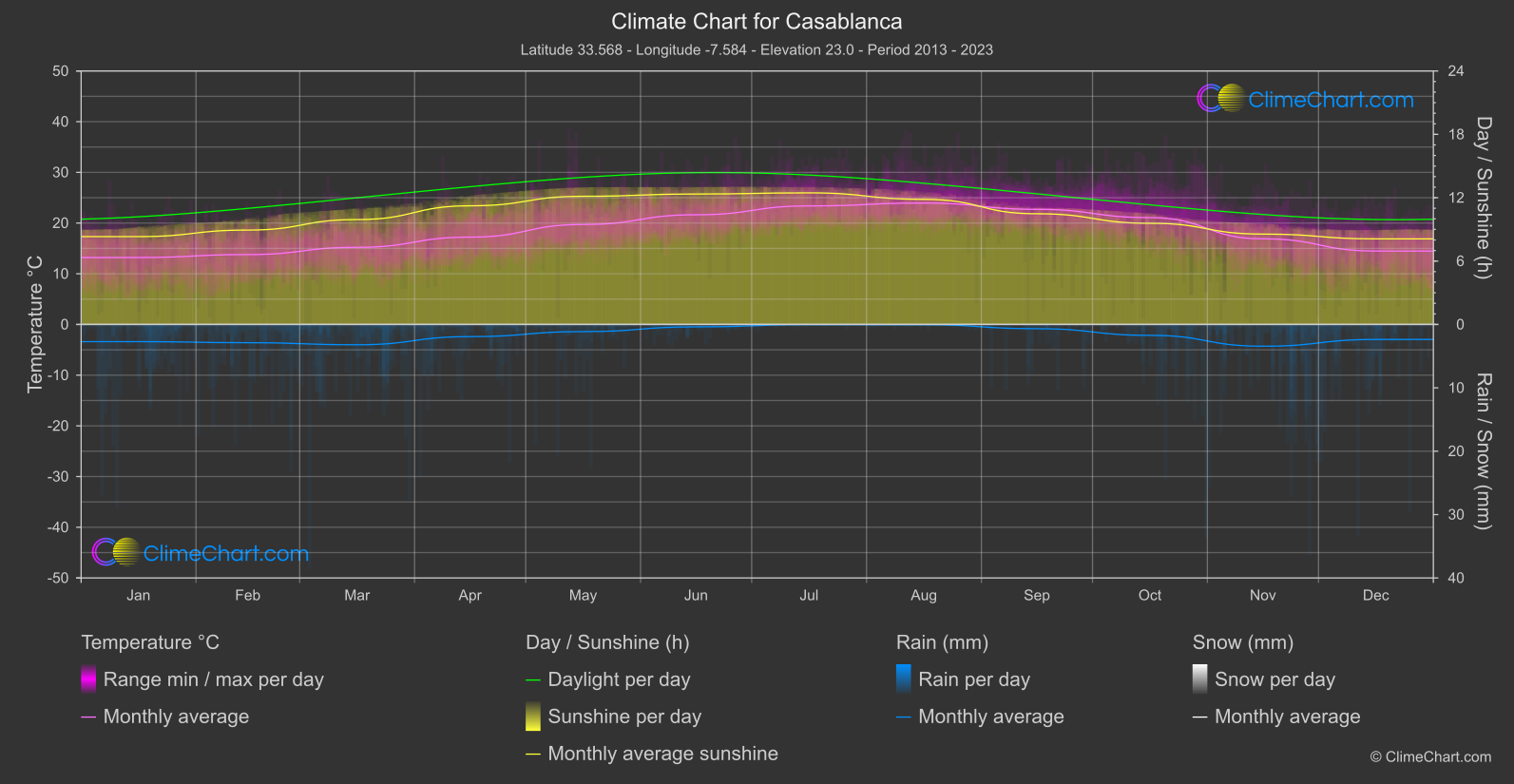
Casablanca
Region North
Monthly mean temperatures are lowest in January at 13.
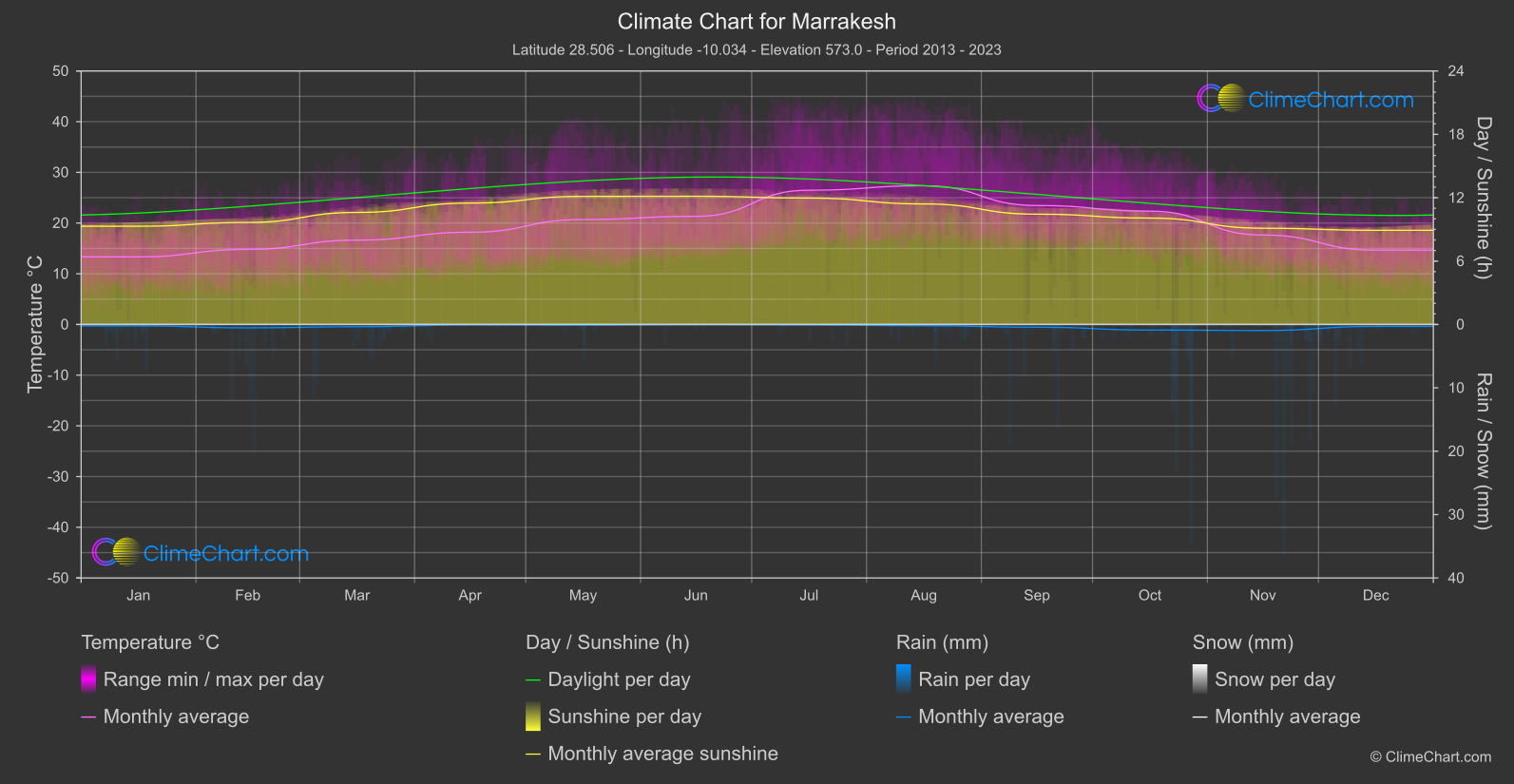
Marrakesh
Region South-West
Marrakesh, located in Morocco, experiences a hot semi-arid climate with long, hot summers and mild winters.
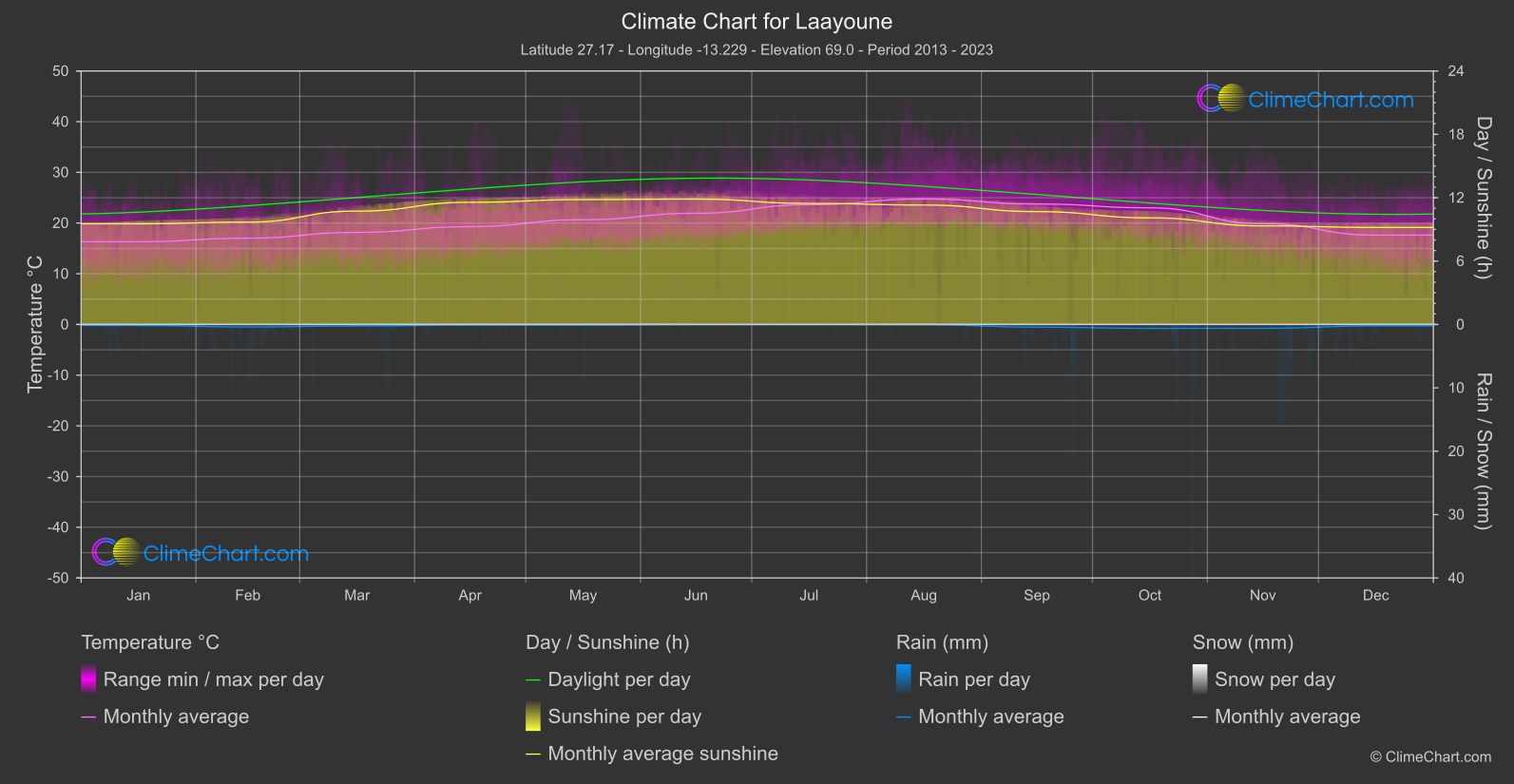
Laayoune
Region South-West
Monthly mean temperatures are highest in August at 24.